In the 28 years since the outbreak of a virus that turned people into raging zombies, governments have fallen, taking familiar infrastructure down with them. While the few remaining survivors hide in isolated places, from tiny islands and mountain caves to coastal farms, a handful of brave souls and madmen are trying to preserve the spirit of fallen humanity.
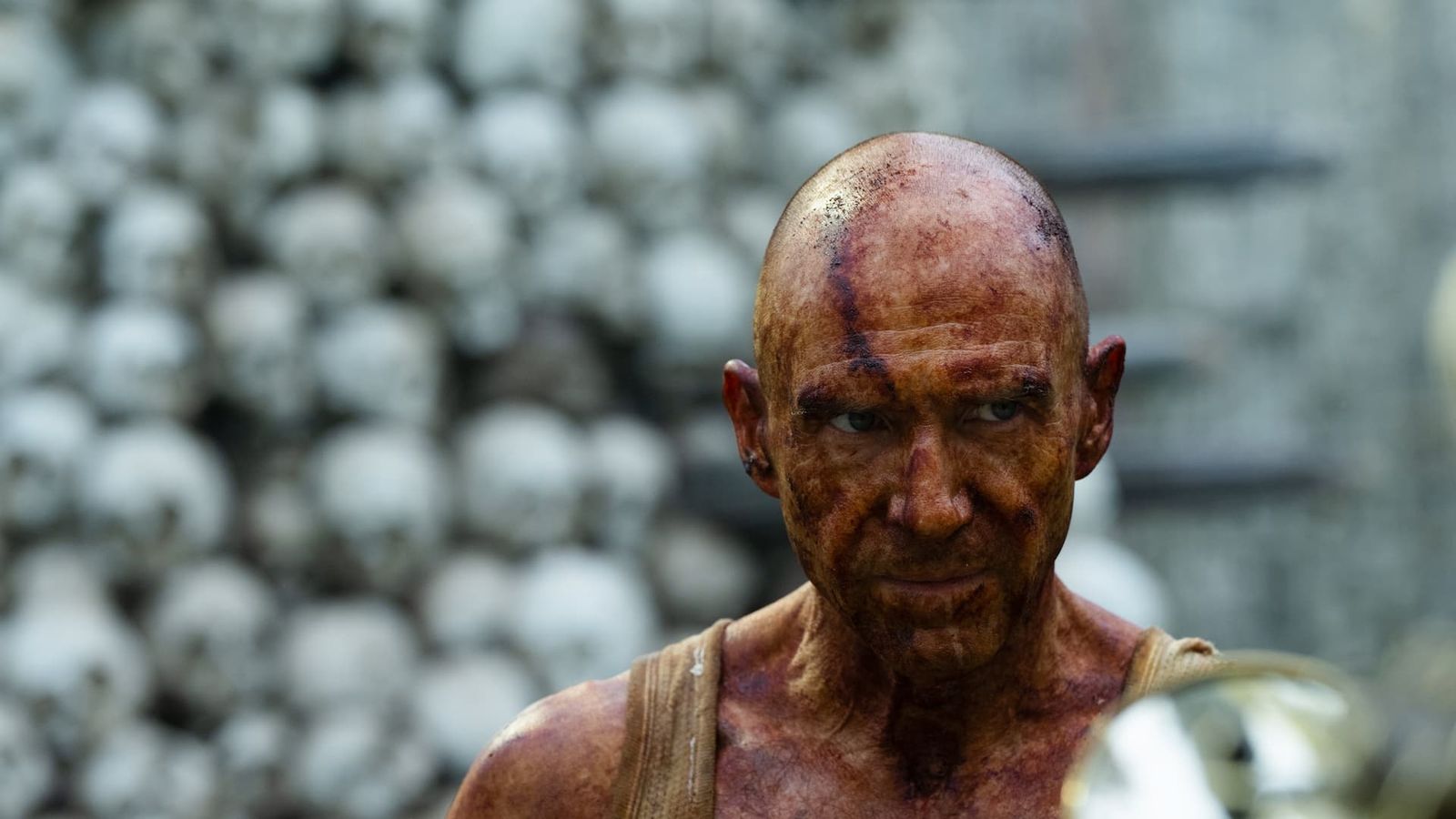
Thus, a solitary man who was a doctor in his former life gathers lifeless bodies like a scavenger and consigns them to the all-forgiving fire. The flames leave behind snow-white bones, indistinguishable whether they belonged to the infected or ordinary people. From these remains, the doctor erects an enormous architectural structure. To his mind, it is a memorial to the old world, a gravestone bearing wordless epitaphs.
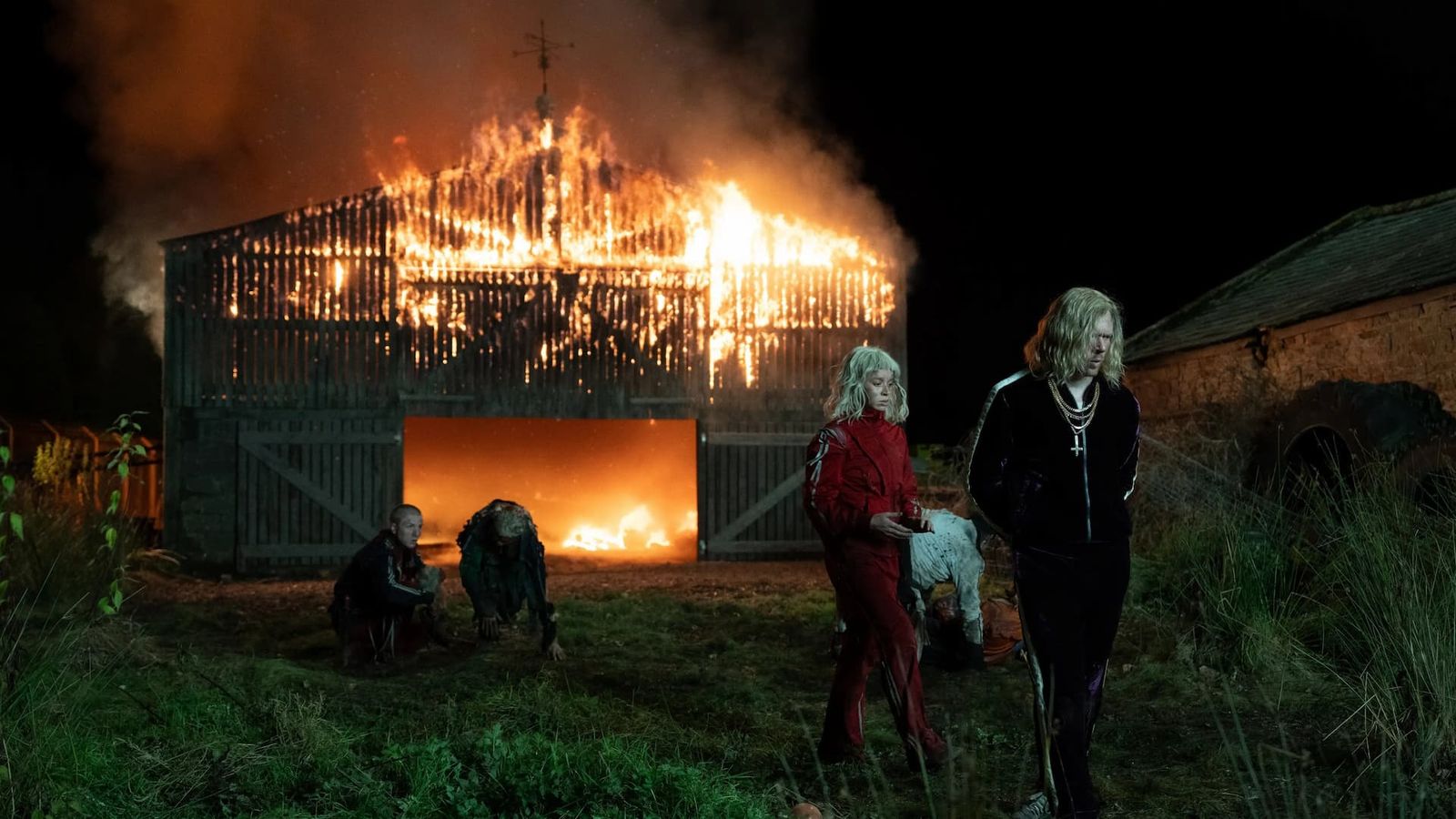
Meanwhile, a gang of teenagers roams the surrounding area under the command of a street kid who believes his father is the devil himself. Or perhaps he merely pretends to believe it, so he can keep his young followers in line and torment them with impunity. They murder survivors for sport and shed their individuality in imitation of their leader, who sometimes becomes tangled in his own teachings.
The cult’s established hierarchy begins to fracture after an encounter with a man whose skin has been burned. Surrounded by skulls and bones, he dances with an infected giant to carefree music. He turns out to be the same doctor who became consumed by apocalyptic architecture. The “family” catches him in the midst of a truly astonishing breakthrough — experiments on the leader of the infected have revealed how they might be cured.
But the self-proclaimed messiah sees the doctor as a danger and a threat to his authority. 28 Years Later: The Bone Temple brings an unconventional idea to films about the walking dead, who have embodied consumer culture, military conflict, and emotional numbness — and this time reflect an inability to cope with emotion.
The virus here does not decompose the bodies of the infected: they remain alive and can even produce offspring. The infection attacks the mind — anxiety of unimaginable proportions, long dormant within, breeds violence and reduces its victims to a primal response to stimuli: attempting to eliminate them by any means necessary. Blind rage engulfs their hollowed-out minds and drives them to kill.
The doctor names the enormous zombie Samson, administers sedatives to him, and gradually restores the clarity of his thoughts and his memories of the past. The scenes that delve into bygone days and the intimate conversations are slow and dreamlike; tension and anxiety recede, and for a moment the fallen world is “cleansed.”
Simple communication forges a friendship between the doctor and the once-dead man, against which the teenage cult inspires fear, shame, and disgust. Almost 30 years of fighting for survival have only brought the destructive pursuit of personal gain into sharper relief. At the same time, this mutual therapy benefits not only the disfigured infected man but also his savior, whose sanity the other survivors doubt.
While working on 28 Years Later, Danny Boyle faced several creative challenges. He had to make a large-scale thrill ride that would never leave the audience bored and reimagine his own 28 Days Later without forgetting its defining features — fast zombies, found-footage stylization, and the horrifying things people do.
That is why 28 Years Later contains almost no quiet scenes. The director uses them solely as breathers before the next eruption — swift and spectacular, driven by rapid-fire editing and bursts of video art. Weary people struggle to survive in a cursed world where a second’s hesitation can cost them their lives. The breakneck pace and images resembling rough amateur footage reinforce this idea.
Nia DaCosta took the director’s chair for 28 Years Later: The Bone Temple. She transformed the original film’s visual architecture to emphasize a more unhurried and, in some ways, even romantic story. The headlong rush of images and all-pervading sense of loss give way to quiet, dialogue-driven scenes pierced by faint rays of hope.
The anxiety that mounted throughout the first film gradually dissipates as Samson regains his humanity, the ability to shape sounds into words, and the capacity to express his thoughts. The world of the previous films, hemmed in by the narrow confines of the frame, fills with air and loosens its grip.
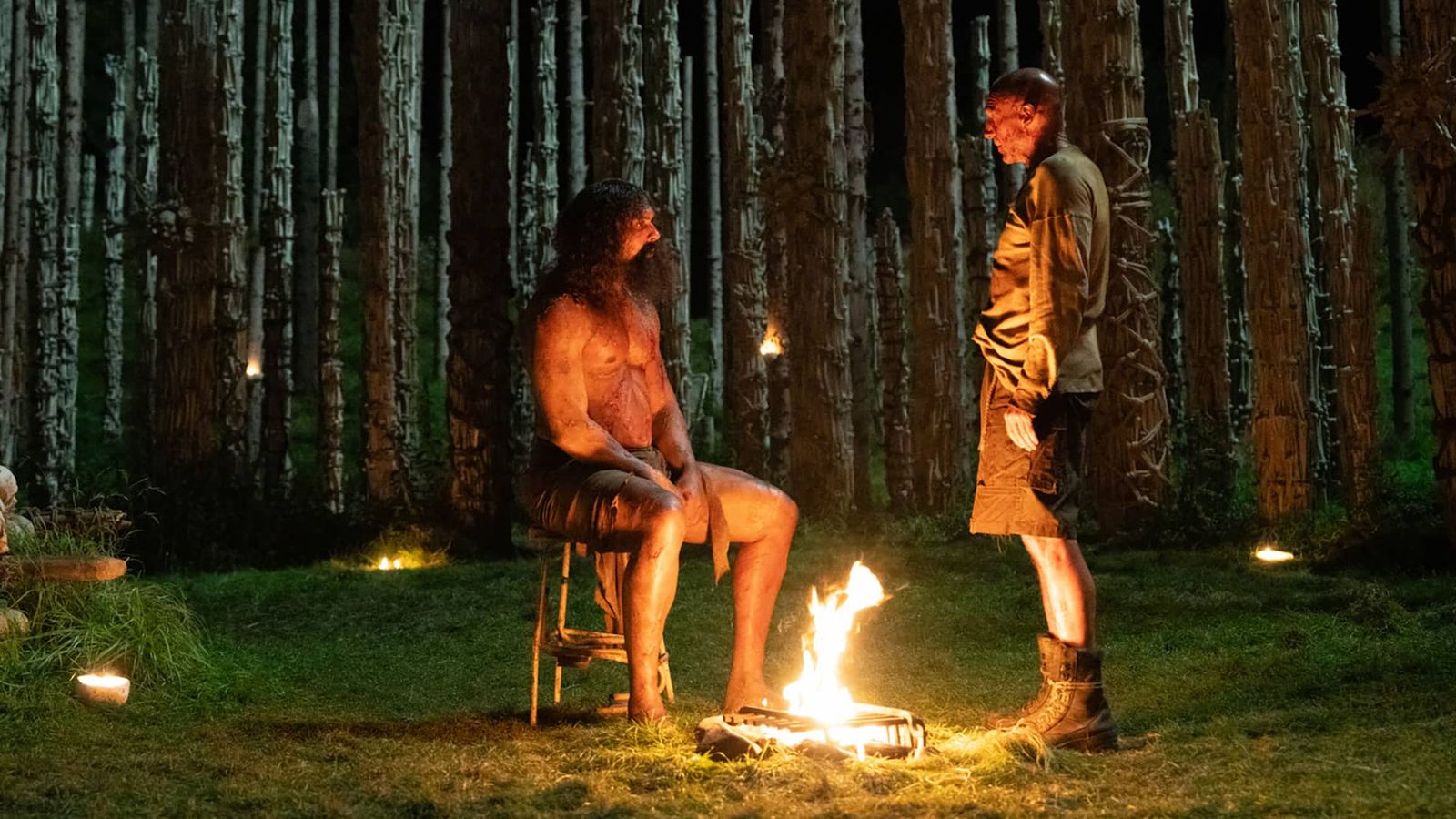
The narrative locomotive slows, and an intimate drama comes to rest in the spotlight. The protagonists no longer sprint in a straight line or weave through corridors of bone. At a certain point, they almost come to a standstill, savoring the gleam of tiny details that might seem irrelevant to the story.
Nia DaCosta moves at an unhurried pace that suits the material. Her gaze settles more readily on individual details that stand out from the broader landscape — drops of dew, a blueberry-colored sky, hot steam, gleaming skulls, expressive dances, a fiery glow, the scars on Samson’s body, vinyl record sleeves, and the tiniest bones in the mad doctor’s temple.

28 Years Later: The Bone Temple embodies the ritual mystery that separates one stage of life from another. The previous film’s rawness has receded into the past, becoming an experience that has been lived through and reflected upon, making room for new emotions. There is now space for dialogue with people who know how to listen and recognize goodness even in stereotypical monsters.