Above the roofs of shabby houses sweltering in the tropical heat comes the drone of a small plane, its rusty belly smeared with river mud. It drags uncertainly behind it a banner trembling in the wind, emblazoned with the uplifting words “The Future Is for Everyone.” With this very slogan, Brazil’s authorities promise their flock a world of extraordinary prospects and opportunities.
For seventy-seven years, Tereza has looked up from below at this flying lump of tin, believing every word written on its deceitful strip of cloth. The future passes over her town twice a day, yet has never once landed. But she is not one to complain: she has a job and a home, and everything else can be endured.
A damp chill hangs over the factory where Tereza spends one indistinguishable day after another. Caimans drift along the chutes with their eyes closed and mouths half-open, as though each one died in the middle of a casual conversation. The job requires nothing but callousness and a steady hand, and for decades Tereza has held her knife with confidence, always ready to dispatch another defenseless animal.
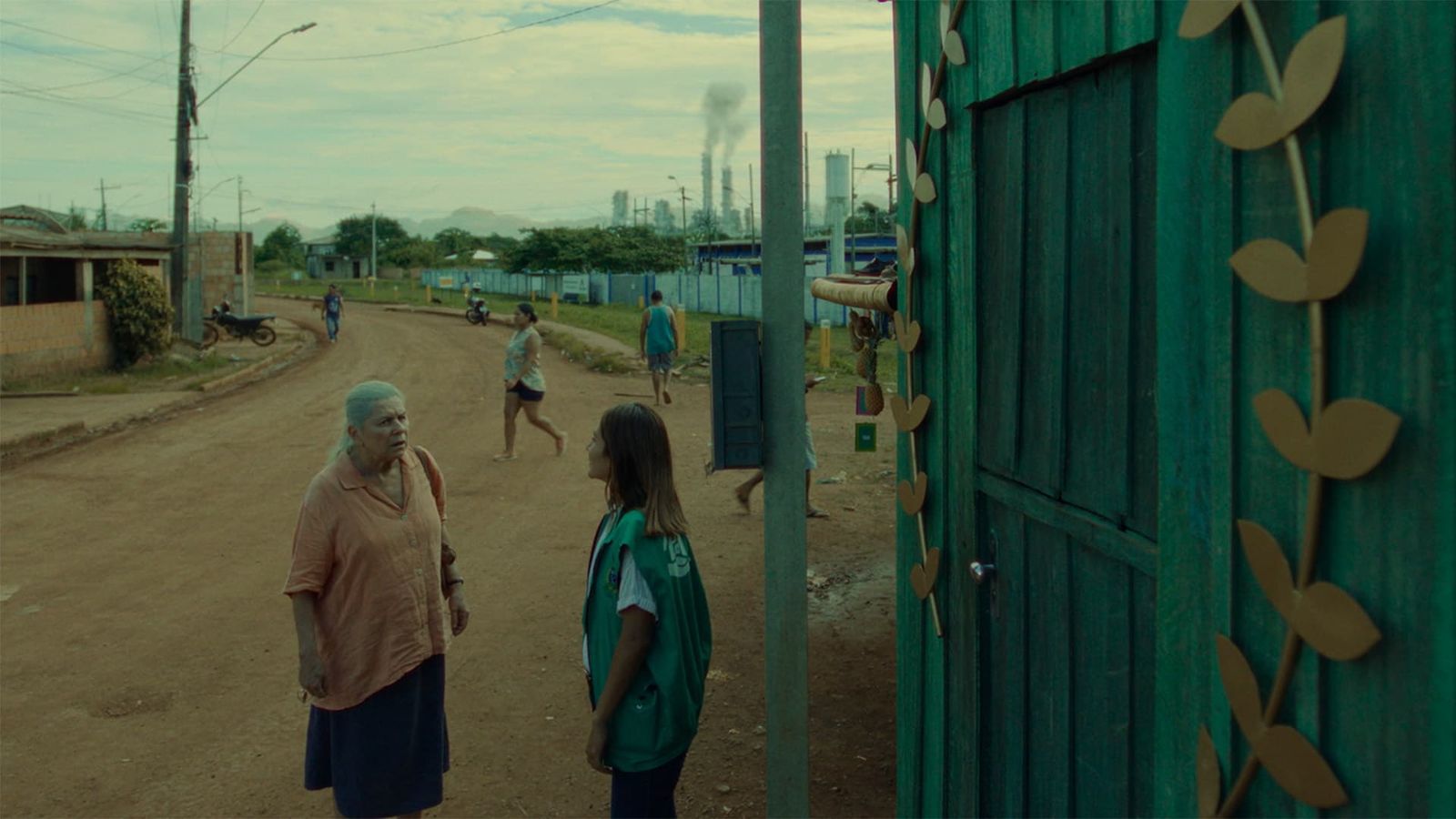
One day, Tereza returns home to discover a new development. Gleaming laurels adorn the space above her door, while a woman with a tablet explains that they are a gift from the community in recognition of all the years she has lived. Old age comes not only with a gold medal and a note of thanks, but also with retirement benefits: compulsory guardianship and a one-way ticket to the Colony.
Overnight, the protagonist is stripped of every basic right. Without permission from her daughter, who takes almost no interest in her mother’s life, she cannot even buy a train ticket. Meanwhile, the vans that once carried stray dogs to the slaughterhouse are now filled with older people bound for a bright future. Dressed in diapers “for their own good,” they are taken to a camp from which no one returns.
Realizing that she has put her life off for long enough, Tereza decides to fulfill her dream of flying in a plane. But without a dozen signatures, she cannot take a single step, so she heads for the raging river with no plan whatsoever. After all, it is the only thing in town that neither follows a timetable nor asks to see her papers.
Gabriel Mascaro’s “The Blue Trail” quietly follows its protagonist, barely intruding on her difficult journey through the Brazilian jungle. The narrow frame deliberately restricts both the scene and our field of vision: to Tereza, the road is a progression toward a goal and then toward the next obstacle, whose immediate presence leaves no room to be distracted by the frightening vastness of the Amazon.
The widest river on the planet is confined within a cramped square. Panoramas of the majestic and perilous jungle are deliberately denied the screen, leaving barely any room for the characters. Gabriel Mascaro does not invite us to admire the scenery like tourists or survey the horizon with a colonial conqueror’s gaze. This is a modest story about an overlooked person, every bit as enclosed as the frame itself.
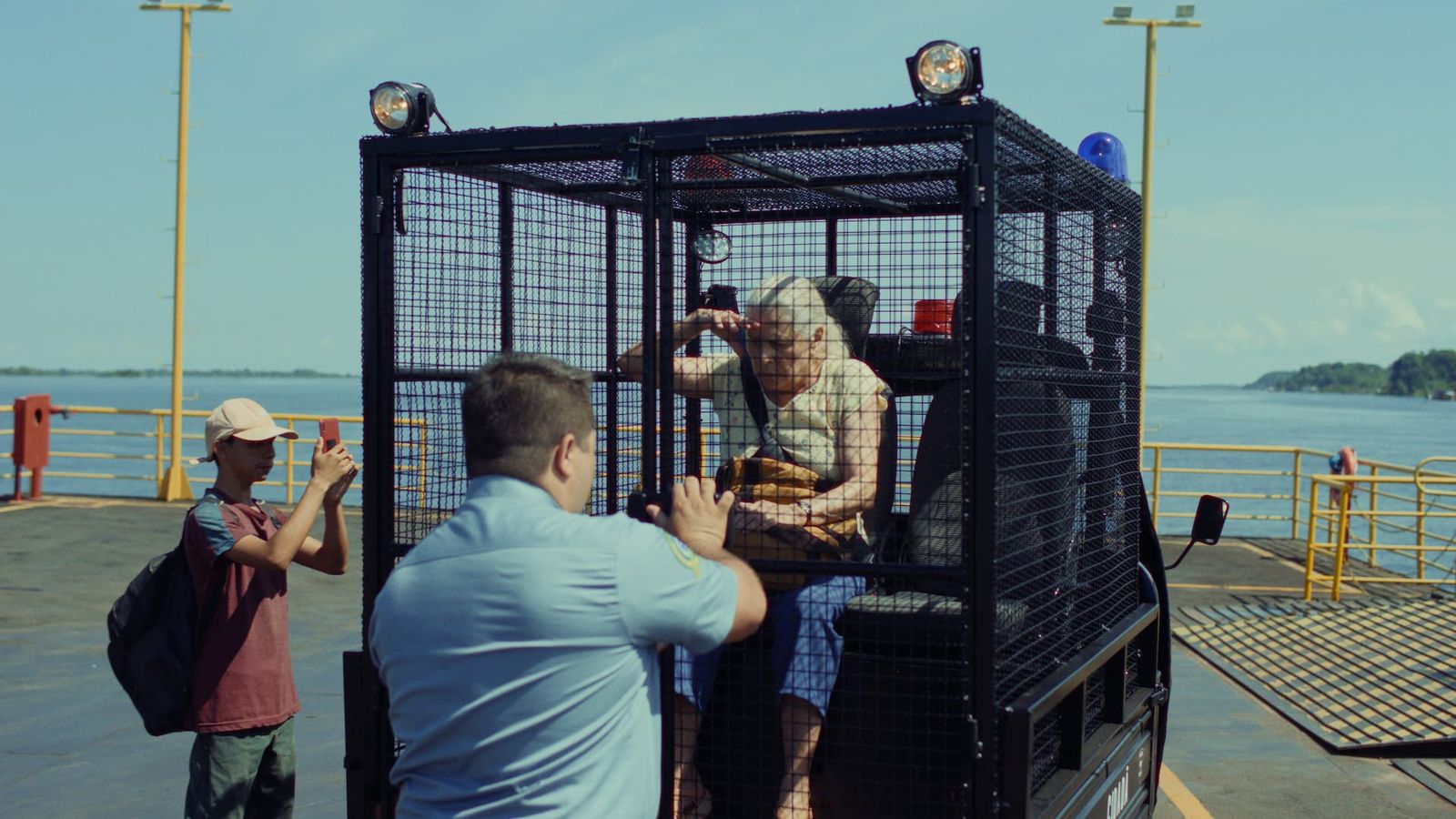
This Latin American dystopia bears a disturbing resemblance to the modern world, where old age is respected only on paper, duly stamped, filed, and tucked away in a drawer. The best such a society can offer its older citizens is loneliness and neglect. Having never once considered her own needs, Tereza becomes a prisoner simply because she has lived in her homeland for too long.
Government officials are genuinely baffled by the obstinate old woman who refuses their honors and will not accept a certificate “for old age.” To them, the bureaucratic concern hiding behind the slogan “The Future Is for Everyone” is an expression of love and respect. In their view, locking older people away in care homes is far more humane than allowing them to face life’s hardships on their own.
Tereza’s journey takes her into the very heart of the jungle, through crowded, noisy ports and the hastily assembled civilization of remote villages. She gradually gathers friends and enemies, unforeseen problems and unexpected solutions. And it becomes clear even to her that the only resource truly needed for change is the desire to live, seasoned with a pinch of courage.

The frail old woman becomes the rightful protagonist of her own story, ready both to learn how to pilot a boat and to emerge victorious from a card game on the black market. Once she realizes that a life without a home, a job, or a future leaves her with nothing more to lose, she goes all in. Besides, the worst anyone can do is return her to the caring hands of the state from which she escaped.
All her life, Tereza cherished the dream of traveling by plane, an impossible fairy tale, while her youth gathered dust beside her until it rotted away and crumbled into nothing. She kept postponing her life until better times arrived, only to discover how easily that life could be stolen, sealed, and filed away in a folder.

The pattern of putting life on hold that permeates The Blue Trail is hardly confined to old age. Yet when someone’s remaining years can be counted on the fingers of one hand, it becomes painfully clear that the wait for a turning point can drag on for far too long. And a sign from above that the time has come to change something may go unnoticed altogether.