Jeff and Emily rarely speak to their father, and the days between their visits stretch into years. The elderly man lives in a ramshackle house deep in the woods, forever struggling with a leaky roof or a broken pump. Were it not for these mundane troubles, his son and daughter would barely give their lonely father a thought.
But everyday obligations compel the scattered family to show warmth and care from time to time. A couple of years after their last reunion at their mother’s funeral, Jeff and Emily head out to their father’s remote home — to check on his health and deliver groceries. The visit, which begins with an awkward silence in the car, leaves them only with a sense of cold disconnection.
The brother and sister can barely find common ground: they constantly stumble onto subjects best left undiscussed or choose the wrong words. Their time apart has eroded the foundations of their family bond so thoroughly that building a conversation upon them is almost impossible. When Jeff and Emily arrive at their father’s home, they encounter the same clinging awkwardness, compounded by the generation gap.
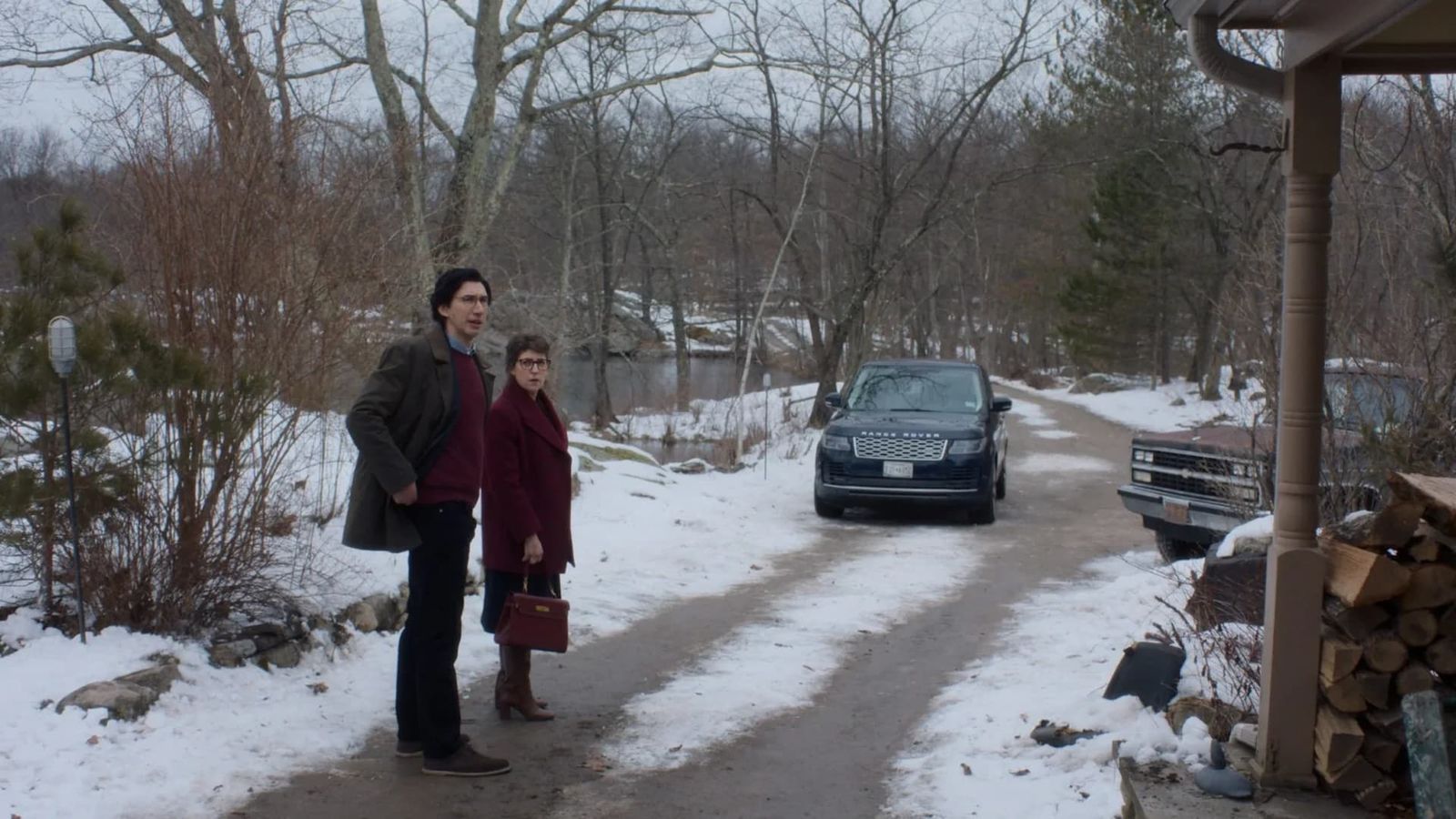
The anthology of stories about the isolation between children and parents, Father Mother Sister Brother, is built around obligatory rituals that have broken through the soil of growing up and estrangement. Separation from one’s parents and the routine that accompanies it are inevitable, but they inadvertently bring a chill into relationships between people who were once closer to each other than anyone else in the world.
The other characters in Jim Jarmusch’s film are the sisters Timothea and Lilith, whose bond is even more tenuous. Meeting once a year for an obligatory reunion with their strict, conservative mother, they are reminded time and again why life has scattered them to opposite poles. Yet strained smiles and cautious jokes do little to conceal the rift.
Free-spirited and pink-haired, Lilith floats through a world of possibilities, dreams, and endless career paths, none of which she has chosen so far. The serious Timothea, by contrast, follows a line mapped out long ago without straying a single step. What unites them, perhaps against their will, is one thing — both women are dying to please their mother.
The reserved parent treats her daughters coolly, but behind that coolness lies not nervous awkwardness, but imperiousness and disappointment. While Lilith displeases her mother with her rebelliousness and uncertainty, Timothea disappoints her by having no notable achievements. For decades, this has fostered an unhealthy competition for the love of a woman incapable of giving it.
Both vignettes portray a similar dynamic in one way or another. The characters, brought together by circumstance but not by feeling, go through a meaningless ritual that brings everyone nothing but old pain. No one discusses the real problems or voices their grievances or discontent — everyone plays at being polite until the liberating moment of parting arrives.
In contrast to these vignettes, Jim Jarmusch depicts a third. In it, twins Skye and Billy meet in Paris to return to their parents’ apartment one last time. The catch is that, unlike in the previous stories, their father and mother are no longer there: they died in a plane crash, leaving their children a space filled with clutter and cold.
Paradoxically, parental love and care reveal themselves precisely where they should not exist. Old photographs and letters paint a portrait of people who kept secrets large and small for years, who aspired to something for their children and for themselves. After all, parents are not merely a function required to launch a child into free flight, but individuals in their own right, full of desires and aspirations.
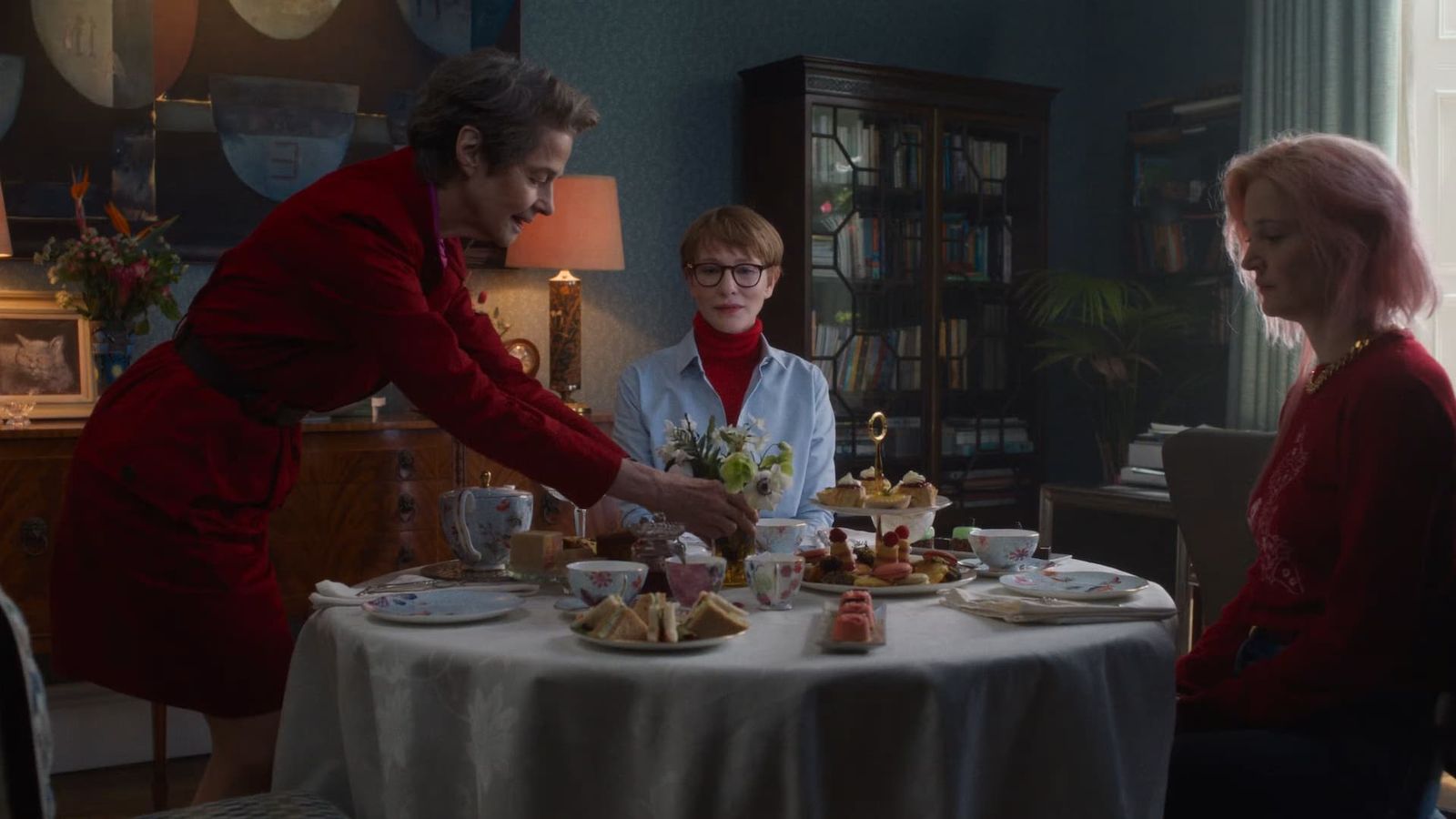
Like Jim Jarmusch’s previous anthologies, Father Mother Sister Brother is structured as a concept album in which individual tracks rhyme with one another, playing with the same themes in different arrangements. The melodies reveal an overarching story, but its moral lies not within the verses, but beyond them, in the rustle of a record that has finished playing.
With a composer’s sweep, Jim Jarmusch plays with rhythms and varies the keys. This structure may resemble a didactic parable in which everything is repeated three times before the hero grasps an important lesson. Yet the barely perceptible but insistent rhymes transform the tale into a musical performance in which silence matters most.
Much of the American director’s work consists of the air that gathers in pauses, on asphalt roads, and in the awkward silence between lines. This emptiness acquires a tangible density, while narrative structures that initially feel like sturdy piles prove hollow and decorative.
The characters do not live in apartments and houses; they are always on the move — in a nighttime taxi or a diner just before closing, at stations seconds before a train arrives. Every journey becomes a metaphor for an inner path, but the destination is unimportant and sometimes does not even exist. For Jim Jarmusch, beauty lies not in the final destination, but in the eternal movement toward it.
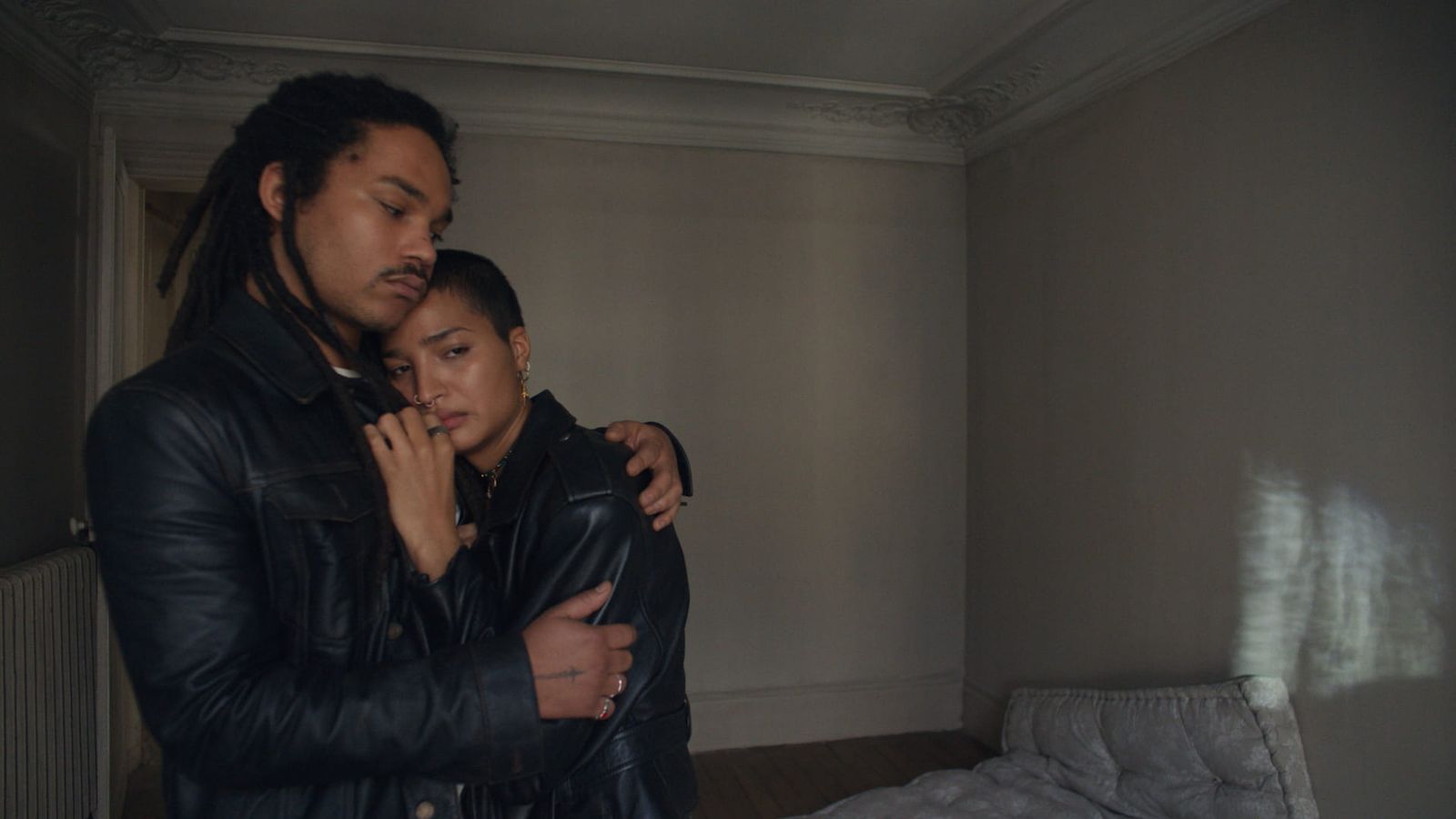
The characters’ lines are inconsequential, because the story is built not on phrases spoken aloud, but on what remains unsaid. The words of estranged children to unloved parents are cast pointlessly onto the surface, like fish onto the shore, and their agony beneath the looming silence sounds far louder than any statement.
The most subtle of these voids opens within the characters themselves, where warmth would seem destined to gather, while expressions of love sound like a rite performed over an abyss of numbness. The children travel to their parents out of duty, put on masks of care, and play out “family relationships” according to the score, passing over the chasm yawning at the very heart of things in silence.

For different reasons, the central characters of Father Mother Sister Brother have lost their connection with their families. Those who have honestly accepted it are unable to change anything, while the rest do not know how to break the cycle of mutual pain and revive feelings smothered by obligation. Love between children and parents is no more unconditional than any other kind. Closeness is not a birthright, and only those who take a step before time tramples the path can hope to preserve it.