Only the patter of endless rain and the devilish howling of the wind wander through the streets of the meager village. Eternal dampness and sticky darkness seep into the place down to its rotting bones. Even the debris and traces of human life, caught in the strengthening storm, seem eager to flee this doomed place.
At the edge of a lightless abyss, where time has long since stopped, only ruins remain. A chapel continues, out of some absurd habit, to toll a mournful bell—though the rusted bell was stolen long ago, and the tower itself has crumbled over the passing millennia. There is not a single living soul around, only semblances of people who, by inertia, drag along a worthless existence.
They live as if the end of the world has already come, but the news somehow passed them by. In time each of them has realized that both behind and ahead lies the same eternal emptiness, and that nothing good or bad will ever happen again. This knowledge has settled into their heavy bodies, hunched shoulders, and weathered faces, erasing any trace of hope.
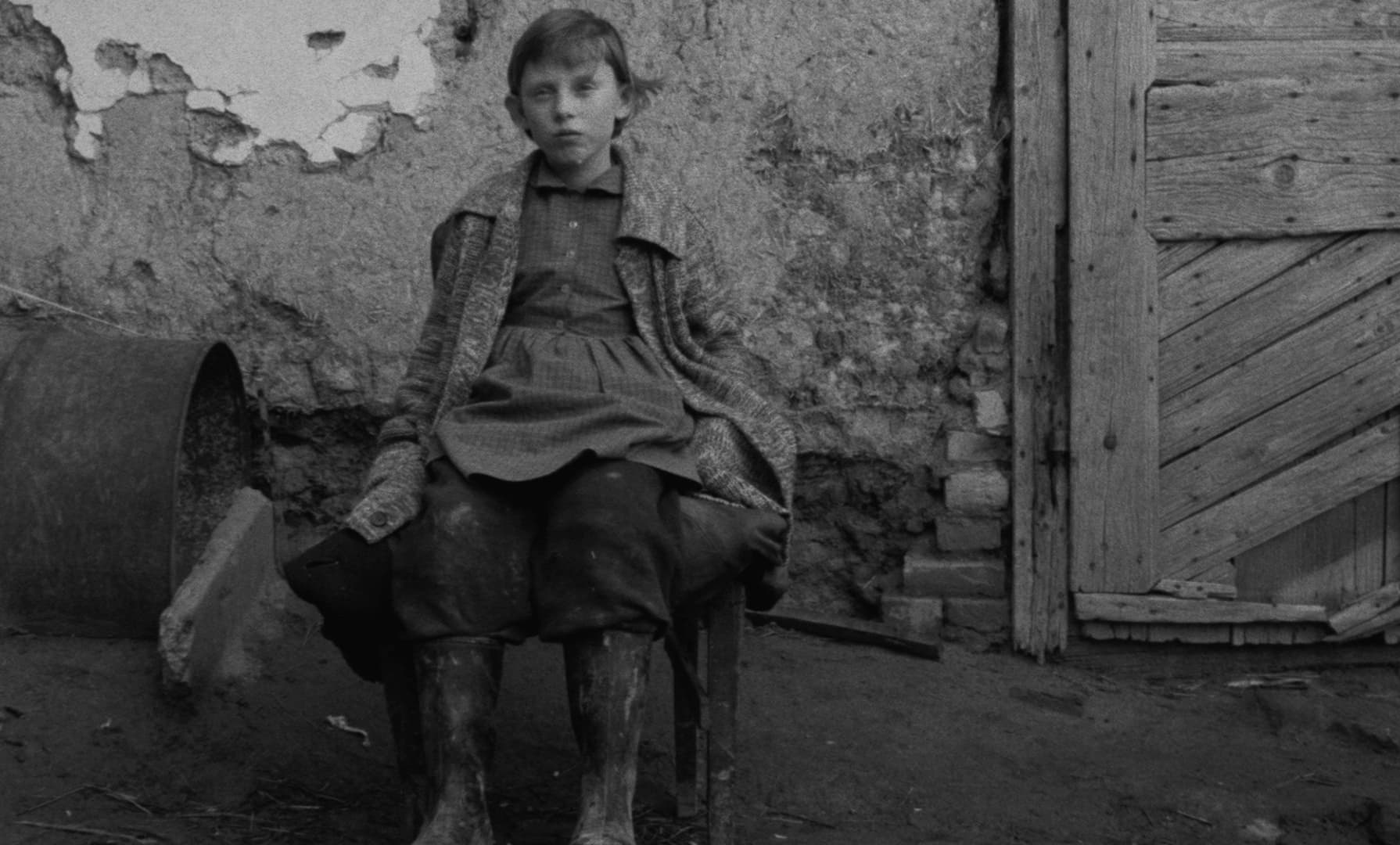
All these people resemble forgotten junk—too pitiful to ever be useful again, yet still holding scraps of memories of a past that never really existed. All that remains is the semblance of daily life: petty quarrels and gossip, dirty love affairs, and counting coins for drink. No one even watches the livestock, which lazily slips through the rotting fences straight into eternity.
The inhabitants here, their dry skin stretched over hollow skulls, seem molded from the same mud — blind and deaf alike. Around them pulse an impenetrable darkness and the ringing silence of a bell that no longer exists. No one knows where they came from or whether they will ever die, though no one truly cares.
Last year carried David Lynch away to the Black Lodge — to sit in a director’s chair and invent new stories for dreams. This new turn of time has taken Béla Tarr into eternity, onto an endless plain beneath a leaden sky — to watch the light fade and listen to the mournful accordion playing Satanic Tango.
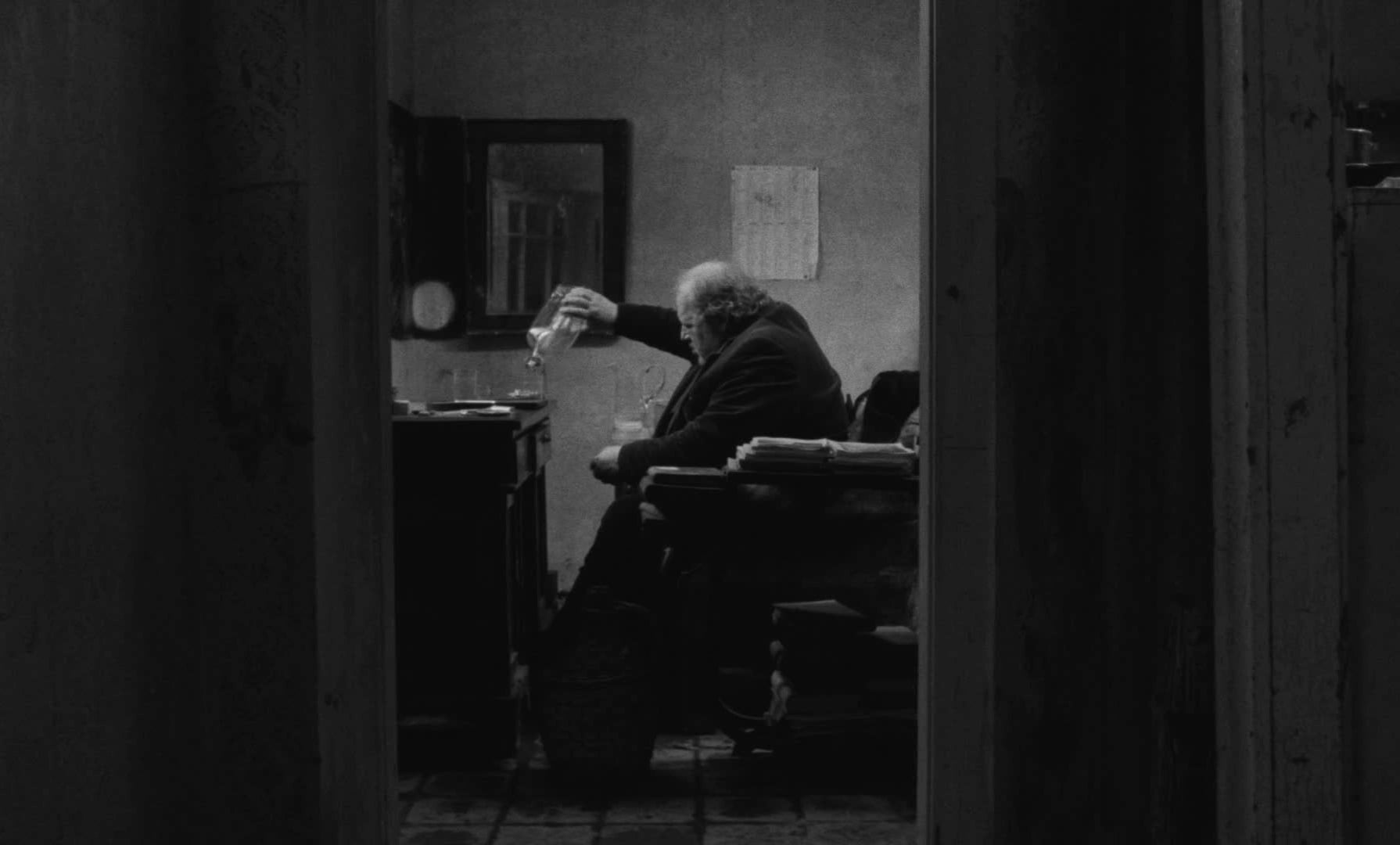
Béla Tarr’s early worlds are urban — cramped, tense, filled with the acrid anger of everyday life. Tiny windowless rooms and filthy kitchens turn even the loftiest love of the “panel-house people” into shouting through the walls. Yet cruelty is not a disease but a defense mechanism against a hostile world that washes the last grains of kindness from the soul.
With Damnation begins his great country of rain and endless waiting: hope for things that will never happen, a game of chess with death, and a desperate longing for warmth that has already faded. But the final song in the bar that is already closing falls silent, and with the night an overwhelming despair descends upon the town.
Then the silence is pierced by a creaking melody. In a village tavern a drunk plays Satanic Tango, while his neighbors, lost in oblivion, perform a dance of death. All these fools and misers are destined to die, collapsing beneath the benches one by one. Yet by morning they will wake and return to their shacks — for neither time nor the laws of life have any power over what has long since vanished into nothingness.
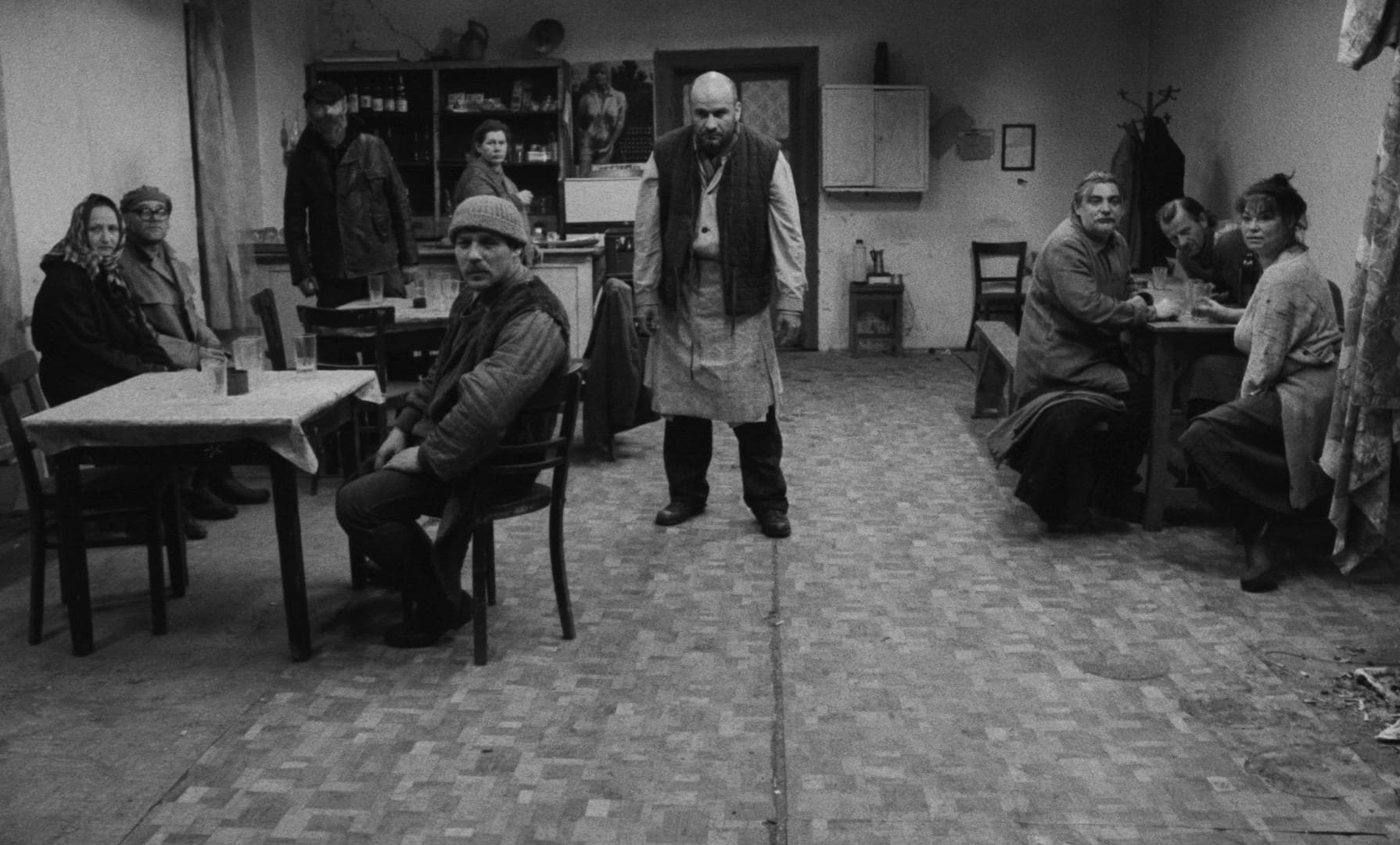
The characters of the film resemble a single sick organism, its internal organs tangled together and preventing one another from functioning. They stay close because loneliness in the void would be even more terrifying, yet each dreams of snatching some personal advantage and, if only for a moment, feeling the beating of their own heart. The only thing that stops them is the fear of tomorrow.
The whole village is waiting for the arrival of Irimiás, who supposedly died before their eyes a couple of years ago and is now returning from the capital. Like the tolling of a bell from a ruined belfry, the news of his imminent arrival sends chills down their spines, yet surprises no one. Such are the laws of the abyss, and fools do not ask questions.
Irimiás — perhaps a resurrected Lazarus, perhaps Satan himself, perhaps merely a common swindler — trudges heavily across the empty fields. The villagers are right to fear him, for he knows how to turn naïveté into blind faith, and faith into power over miserable minds. A single speech is enough to make anyone repent and follow him — whether to heaven or to hell.
The cruel indifference they preach day after day is turned against them by the words of this “messiah.” He condemns heartlessness and hardness, appeals to their foolishness, and, intoxicated by his sweet rhetoric, no one finds the strength to resist. Those who live in filth are ready to follow anyone who promises purity of conscience.
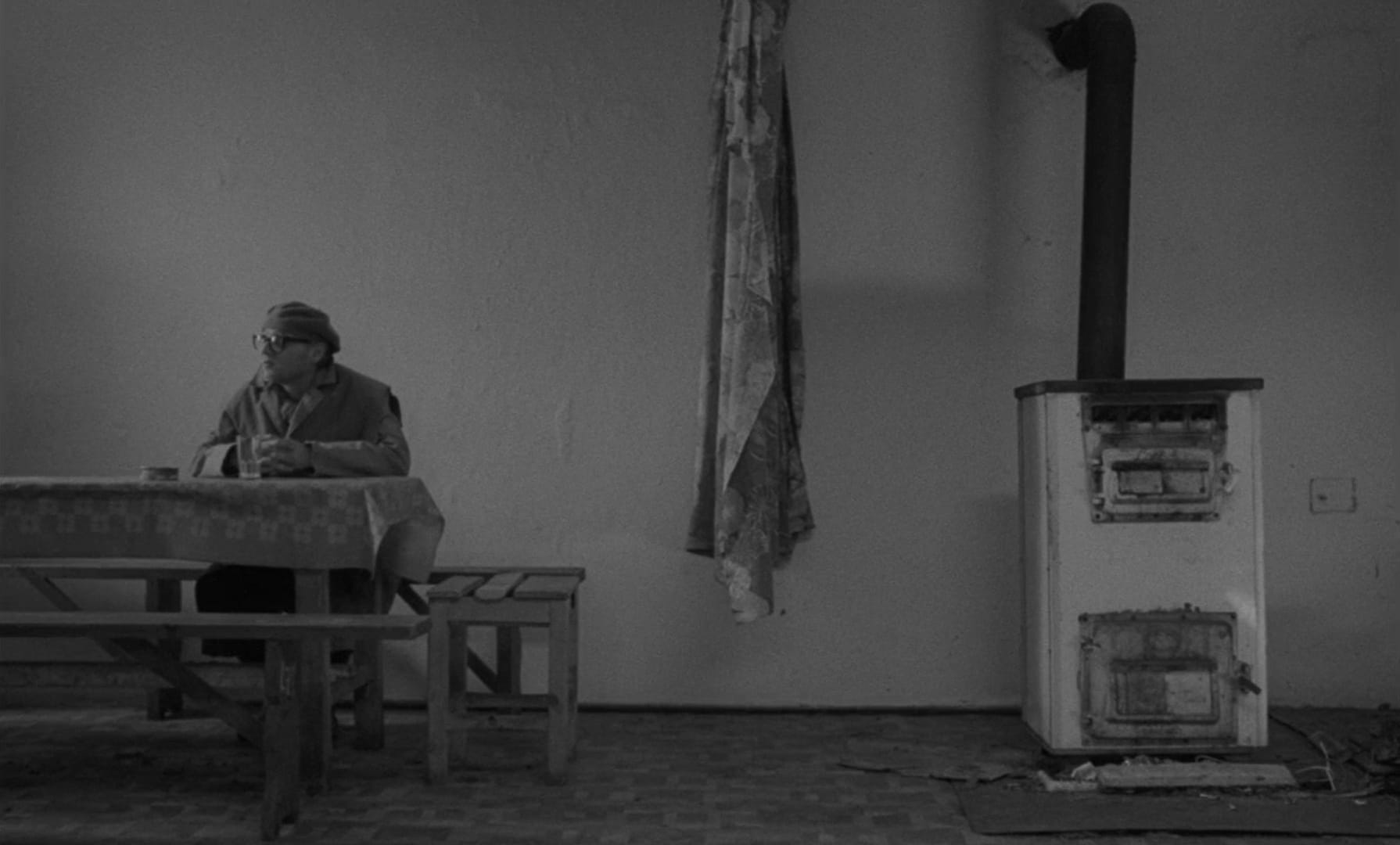
The characters of the film do not seek liberation from eternity; they are quite content with the role of prisoners of someone else’s will. Freedom means responsibility and the need to make decisions for oneself, but no one is ready to break with the comfort of hopelessness. Everyone waits for their troubles to resolve themselves, yet in such places catastrophe rarely falls from the sky — it is assembled from endless nights that bring yet another gray morning.
In The Turin Horse, Béla Tarr’s farewell film, only a single miserable house will remain amid the same emptiness, while the foul weather swallows all the mud and slush. In silence and primitive routine, the characters will wait for the end, whatever form it may take. Yet its approach will bring them a kind of peace and harmony — unlike the chaos of Sátántangó, where people long forgotten by time remain trapped.

Béla Tarr’s mercilessly slow and lingering films offer no answers and place no final points. The silence that filled them has now swallowed the director himself — no more dramatically than the endings that befell his own characters. The world does not collapse in a thunderous explosion, but through a gradual acclimatization to decay. And so the art of the contemplative Hungarian will remain not a monument to darkness, but an exercise in observation — one that teaches us to notice where dissolution begins, while it is still possible to turn it back.