Young Alex Lilly’s life begins to crack when his parents allow Aunt Gladys to move into their home. She suffers from a long-term illness and can no longer take care of herself. Yet neither Alex’s father nor his mother can remember how long they have known the frail aunt, or how old she actually is.
With the arrival of the “stranger,” the Lilly household falls under a feverish dream. Familiar objects grow dim beneath a creeping shadow, Alex’s parents begin to resemble the dead, and life itself seems to smolder under the influence of unseen miasma. Gladys, on the contrary, feels better with each passing day, as if she were drinking the lives of the household members, indifferent to the putrid aftertaste.
The elderly woman is a grotesque witch, versed in forbidden rituals—she works with blood and turns people into raw material to restore her decaying body, slick with cold sweat and lymph. Hysterical laughter, dreadful screams, and whispering incantations become the background to a meditative process: pigments are mixed and carefully applied to the crumbling facade.
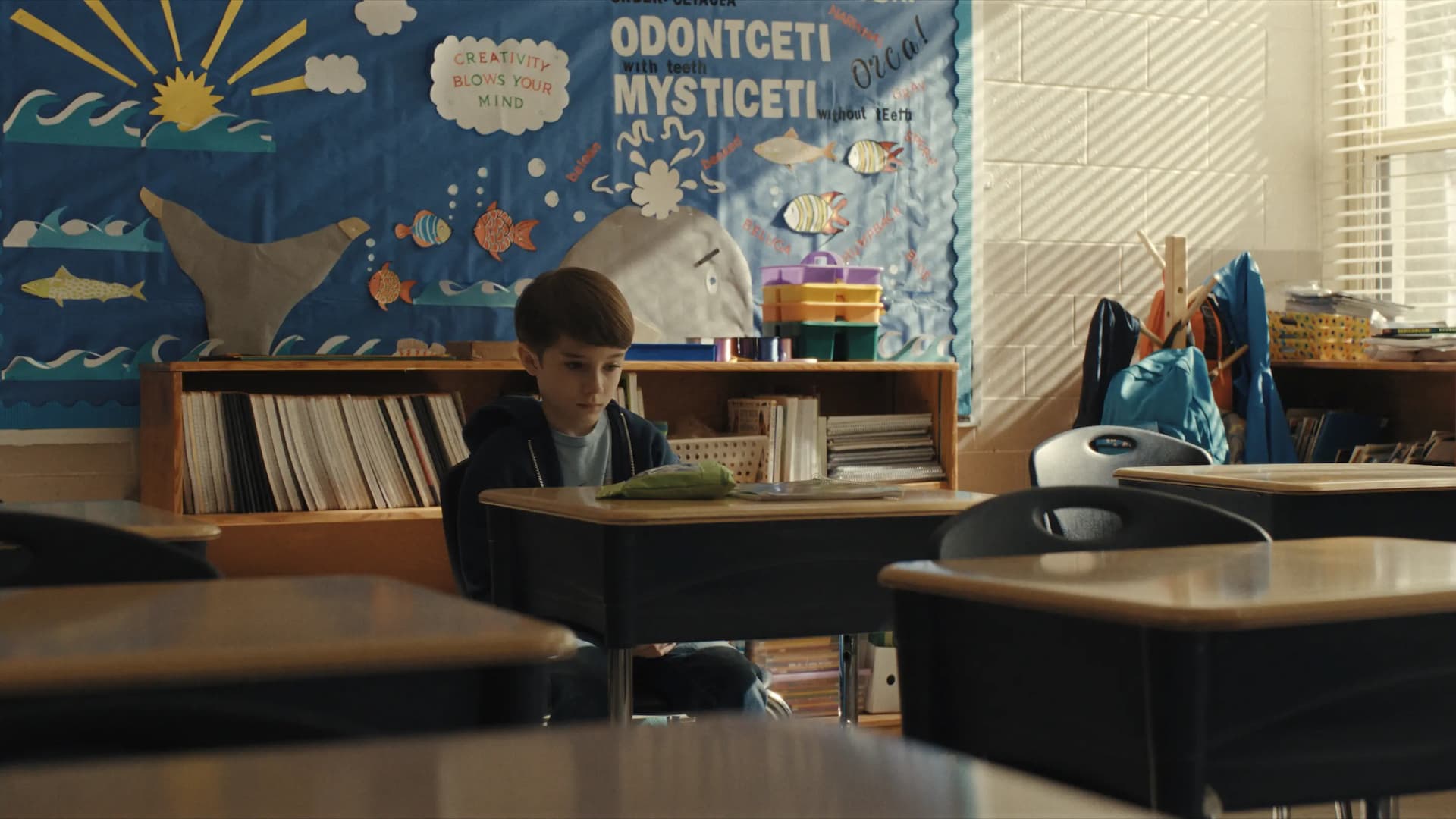
Although the small family proves fertile material for renewing the century-old relic, the greedy Gladys begins abducting Alex’s classmates, layering additional fragments of life onto her stiffened frame. Yet the process that begins with renewal ultimately ends the same way—an experienced witch who personally witnessed the Salem trials cannot turn back the inevitable. The blossoms and shoots of her inner world fade relentlessly, and an eternal autumn dips fallen leaves into the mud.
During the investigation that clings to the backbone of the story, the characters are often shown watching strange phenomena on television—programs about parasites and mold. The cordyceps fungus, whose predatory head resembles a club, parasitizes insects much as Gladys parasitizes Alex’s family and his classmates.
Yet the witch is not so straightforward. Her growing appetite drives her not toward a slow existence sustained by others’ bones and flesh, but toward an active search for material to restore her outer shell. Like a villain from a children’s cartoon, she longs to become “fairer and rosier than all,” fully aware of the futility of that secret wish.
The contradiction turns her actions into a desperate series of movements filled with fear and apathy. Similar emotions permeate the opening scene of Mulholland Drive, in which the heroine boasts about how well she dances the jitterbug. And Weapons becomes Gladys’s prolonged jitterbug — awkward, twitching, hysterical spasms that form a grotesque cascade of past, present, and future, promising nothing but destruction.
In the introduction to the book Past Discontinuous. Fragments of Restoration, the process of renewal is described as something that “enriches the object of restoration by not only protecting it from time and preserving its identity, but also by granting it new, previously unknown qualities.” In other words, the value of the restored artifact increases.
In Gladys’s case, the identity remains, but no new qualities emerge. The dying cadaver is desecrated by forbidden practices, and the witch knows it. Her futile attempts to overcome decay with fresh layers of plaster lend her figure a touch of tragedy, even beyond the context of the ruined lives around her.
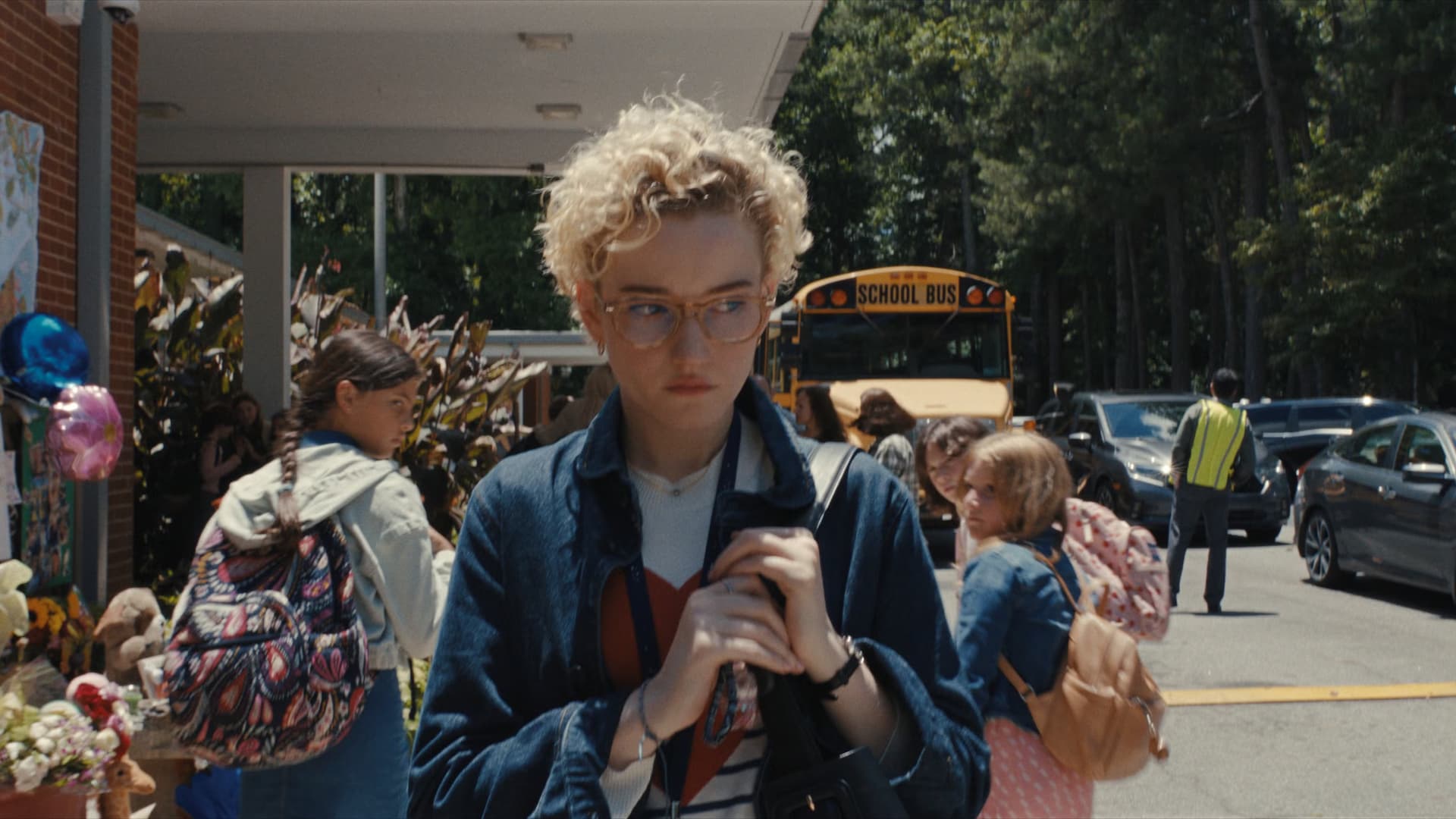
As the story unfolds, Gladys turns into an abstract monument that still retains the ability to move and speak. Her rotting flesh and shattered mind do not harden into solid stone carved by a master’s weary hands. Consuming more and more of the life-giving essence, the hunched figure transforms into a warning.
The director of Weapons, Zach Cregger, has said that he wrote the script in memory of a friend whose life was destroyed by alcoholism, and enriched the story with his own experiences of growing up with parents afflicted by the same disease. For many years young Zach watched how an emotionless liquid drained the health and life from those close to him—and eventually felt its pull himself.
The sense of isolation, shame and resentment, suffering and defeat is projected onto all the characters of the film, including Gladys. As they confront the inevitability of losing both their loved ones and themselves, each passes through the familiar stages of grief. The difference is that the characters who know nothing of forbidden rituals try to endure the ordeal on their own, because for them there is no clear or simple solution.
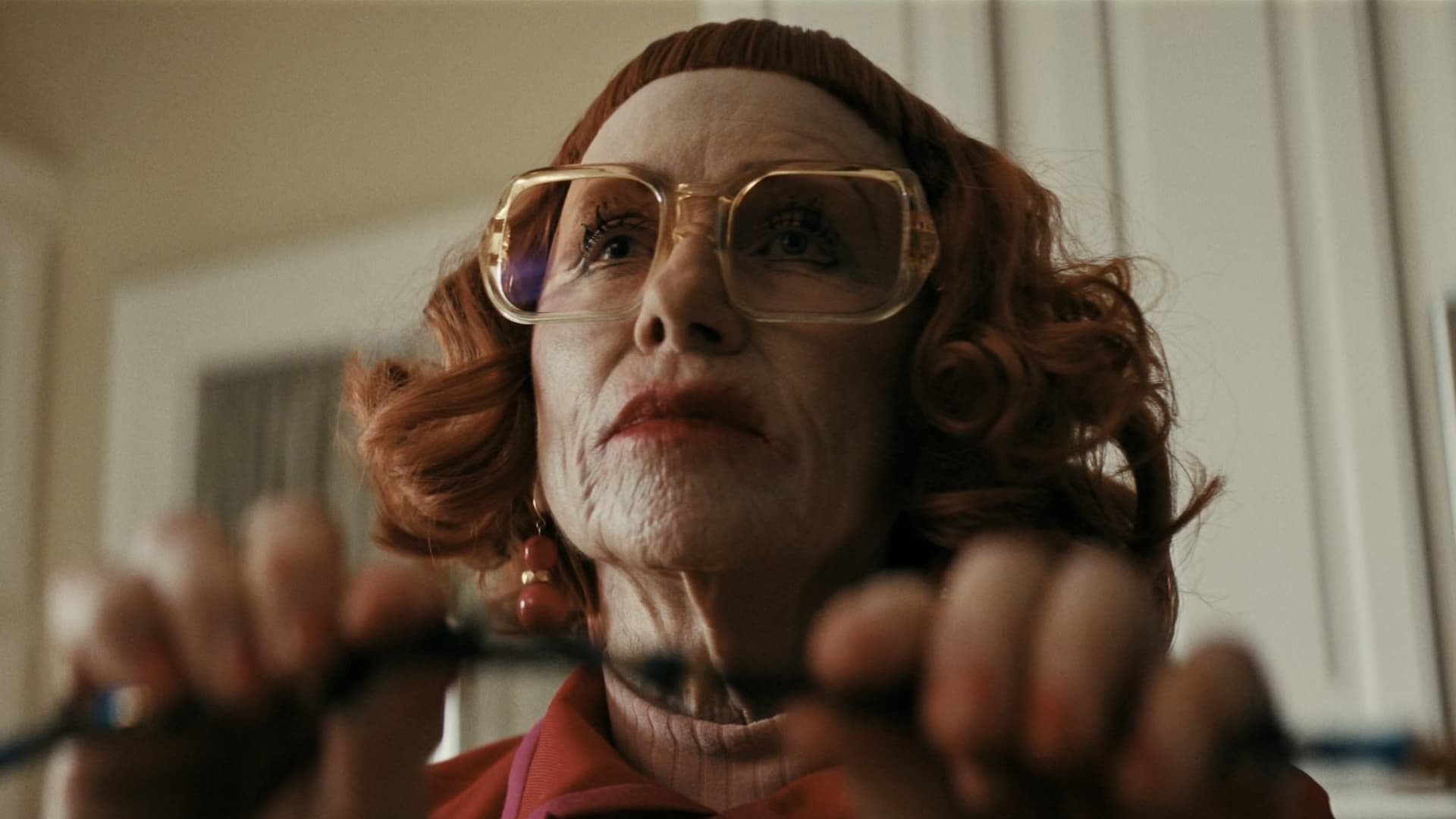
Gladys lives quickly and dies slowly, like a large and ugly stain. She enslaves children and adults alike, leaving both visible and hidden marks on their bodies and souls. Yet the witch is not portrayed as uncompromising Lynchian evil, born in the crater of a nuclear blast solely to harm and corrupt.
She herself has long been enslaved by her own lack of will, suffering just as much from the addiction whose grasping tentacles she cannot break. She must feed on people; otherwise her outer shell will begin to reflect what lies within. Because of this, the witch gnaws at her own tail, and with every bite her restored body resembles less and less the former structure—or even the outline of a human figure.

Gladys turns into ruins. Into charred bricks where a condemned building once stood, with a damp basement and a foundation crushed by the weight of its own “body.” She is destroyed by the very instruments of restoration—metaphorical glasses and bottles of strong drink. Vessels for paints and for life, dishes for mixing and consuming—pure souls led by the clawed hand of decay.