Ion wanders the streets of Cluj-Napoca in search of anything to eat, however meager — he rummages through dumpsters and trash cans, willing to make do with whatever scraps he can find. He has no qualms about accosting a crowd on a busy street to ask for a couple of Romanian lei “on loan.” The more conscientious pass the vagrant a coin; the rest are rewarded with a few choice words from the foul-smelling man.
He is no idler; he is simply chronically unlucky. His initially successful athletic career came to an abrupt end, and his injuries were followed by alcoholism and gambling. Now Ion is forced to eke out a miserable existence, subsisting on scraps from the trash and sleeping in a dilapidated boiler room.

While Ion wanders aimlessly, like a relic of the past, outside time and space, the world around him does not stand still. Proud Romania, which reclaimed its lands from Hungary long ago, is trying to adapt to the bustle of European life. Endless construction sites for shops and business centers rise among ancient castles and fortress walls.
A luxurious hotel called the Kontinental is set to be built on the site of Ion’s makeshift yet permanent shelter, but there is a problem — the vagrant must first be evicted from the basement. This difficult mission falls to Orsolya, a bailiff and an exceptionally compassionate, devout woman who cannot bring herself simply to cast a destitute man out into the cold.
But a job is a job, and after yet another warning, the woman arrives at Ion’s tiny room accompanied by police officers armed with batons and a camera to document the peaceful eviction. Without putting up much resistance, he promises to vacate the premises within an hour, then seizes his chance and hangs himself from the radiator. In a single stroke, both characters’ problems vanish.
Radu Jude, director of Kontinental ’25, emerged from the Romanian New Wave. Unlike his compatriots, who search for truth in the country’s painful past, however, he more often probes the open wounds of the present. Radu Jude pits black humor against everyday tragedies until the desire to empathize with his protagonists gives way to their complete rejection.
An intensely confrontational filmmaker, he turns the sharp edge of his camera on grim outcasts and antiheroes, using their flaws to construct a humanist conflict. Ion is a filthy and unpleasant vagrant who spews elaborate curses and, at the first opportunity, chooses death simply to spite those who wronged him.
His death, however, raises profoundly moral questions. The shaken Orsolya naturally takes what happened personally. By forcing a man — however gently — to leave the only shelter available to him, she condemned him to even greater suffering and, in effect, left him with no choice. Her inflamed conscience now consumes her from within.
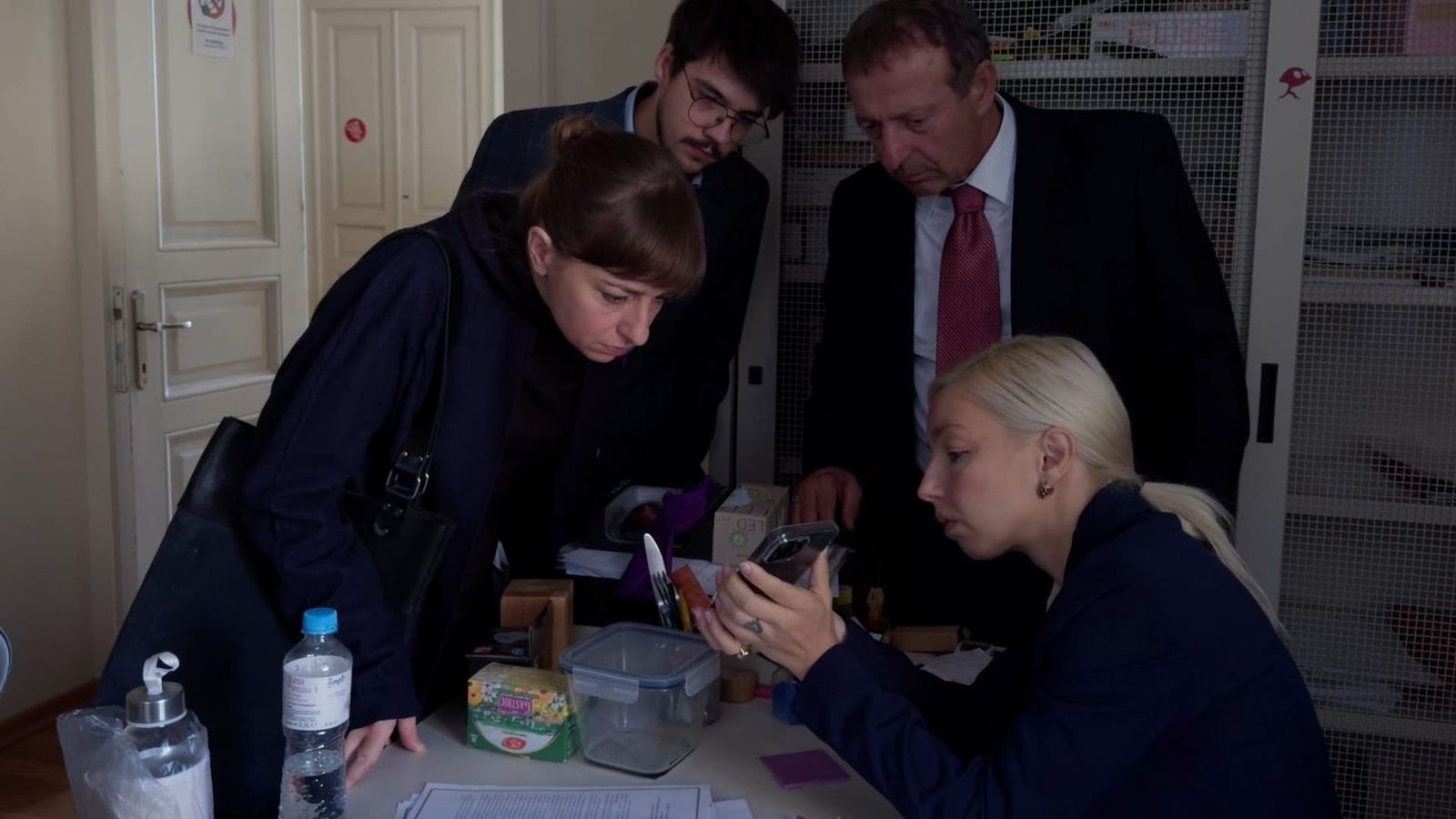
Yet her genuine anguish gradually gives way to the relatively comfortable position of a victim. Orsolya’s colleagues console her by comparing her to Oskar Schindler, who likewise could not save everyone. A cantankerous local priest condemns the man who took his own life, while the woman’s friends regard her as a heroine who has endured an almost unbearable moral ordeal.
As she recounts the boiler-room story again and again, adding more detail each time, Orsolya convinces herself of her own blamelessness. Life is cruel, Ion brought his troubles upon himself, and therefore no one is responsible for what happened. Shedding tears first on her lover’s shoulder and then on the priest’s cassock, the protagonist mourns a stranger’s death with equal measures of sincerity and hypocrisy.

Unlike Radu Jude’s Do Not Expect Too Much from the End of the World (see our article), Kontinental ’25 is a work of neorealism — albeit a satirical one — filmed from an uncomfortably close distance and with an honest sense of tragedy. The camera follows closely behind Orsolya, who becomes almost unrecognizable as time passes. The outcome of her transformation remains unclear — it may signal an awakening humanism or complete moral decay.
Orsolya is not a bad person: she genuinely sympathizes with the misfortunes of others and helps those in need. But her individual responsibility for what happened easily becomes collective responsibility, since the system’s individual cogs would not need to perpetrate evil if the system itself were not so cruel. The woman successfully shifts the blame onto those around her because, within the broader picture, the suffering of individual people becomes invisible.

Kontinental ’25 is a film about people who say the right things but fail to do the right thing. Often, that alone is enough for injustice to spread and grow stronger on the shoulders of otherwise good-natured people. Sometimes conscience is not the part of us that resists an unjust order, but the part that allows us to live with it.